WordPress products
 Joomla products
 Support
 News
News Login
LoginHow to Offload WordPress Media to Vultr Object Storage Using WP Media Folder

As WordPress sites grow, all the images, videos, and files stored on your hosting server can start to slow things down and take up a lot of space, which also makes backups heavier and hosting more expensive over time. A more scalable solution is to move these media files away from your main server and store them in cloud-based object storage, and using Vultr Object Storage together with WP Media Folder makes this process simple, more efficient, and cost-effective while keeping everything easy to manage inside WordPress.
Instead of forcing your WordPress server to store and deliver every file, media is offloaded to a dedicated cloud storage system built for scalability. WP Media Folder then integrates this storage directly into your WordPress media library, so everything still feels native and easy to manage.
In this article, we will break down exactly how this integration works, why it improves performance, and how you can set it up correctly using the official WP Media Folder Vultr integration workflow.
Table of content
Say goodbye to messy media library.
WP Media Folder lets you categorize files, sync folders with
cloud storage, create amazing galleries and even
replace images without breaking links.
Optimize your media workflow today
Why Offload WordPress Media to Object Storage

When WordPress runs on traditional hosting, all media files are stored locally. This creates several long-term issues:
- Storage fills up quickly
- Backups become slow and heavy
- Hosting costs increase with storage upgrades
- Server performance decreases under high traffic
Every time a page loads, the server must retrieve images and files while also handling WordPress logic, database queries, and plugins. This combination creates unnecessary strain.
Offloading media solves this by separating file storage from website hosting. Instead of serving files from your WordPress server, they are served from a cloud storage system designed specifically for scalability and high availability.
The result is:
- Faster page load times
- Reduced server CPU and disk usage
- Smaller backups
- More stable performance under traffic spikes
From an SEO perspective, faster websites tend to rank better because search engines prioritize user experience and loading speed.
Vultr Object Storage Overview
Vultr Object Storage is a scalable cloud storage service designed to store large amounts of unstructured data such as images, videos, and backups.
Unlike traditional hosting storage, object storage is built to:
- Handle massive file libraries
- Scale automatically without server upgrades
- Deliver files efficiently over the internet
- Reduce dependency on your main hosting environment
One of its main advantages is cost efficiency. Compared to other cloud providers, Vultr is often positioned as a more affordable alternative while still offering reliable performance and S3-compatible storage architecture.
This makes it particularly attractive for WordPress websites that need cloud-level scalability without enterprise-level pricing.
WP Media Folder and Vultr Integration Overview
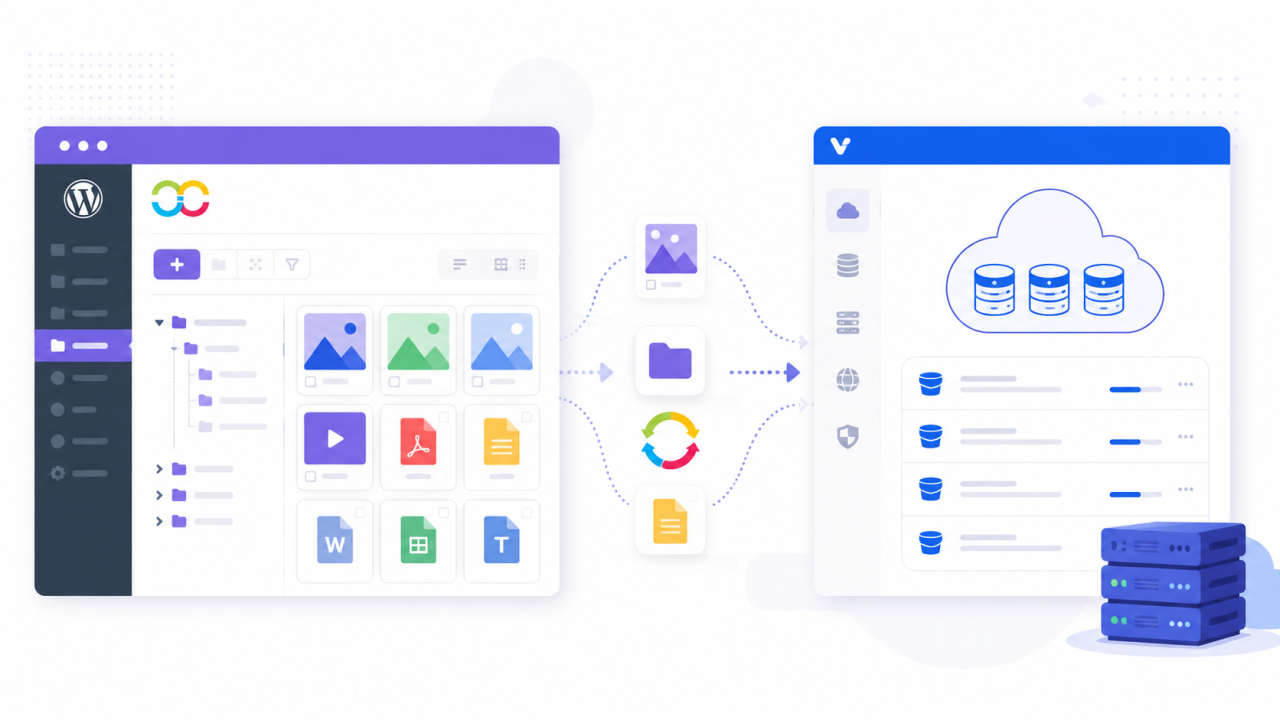
JoomUnited WP Media Folder is a WordPress plugin that enhances media management by adding folders, organization tools, and cloud storage integrations.
For Vultr integration, WP Media Folder does not simply "upload to cloud storage." Instead, it uses a structured cloud synchronization system through its Cloud Addon.
This integration allows WordPress to:
- Upload media directly to Vultr Object Storage
- Sync existing media libraries
- Rewrite media URLs automatically
- Keep everything manageable inside the WordPress dashboard
The key advantage is that users do not need to manually handle cloud storage logic. Everything is controlled from inside WordPress.
Step 1: Create Vultr Object Storage
Before connecting WordPress, you must first set up storage in Vultr:
- Log in to your Vultr account
- Navigate to Object Storage
- Create a new storage instance
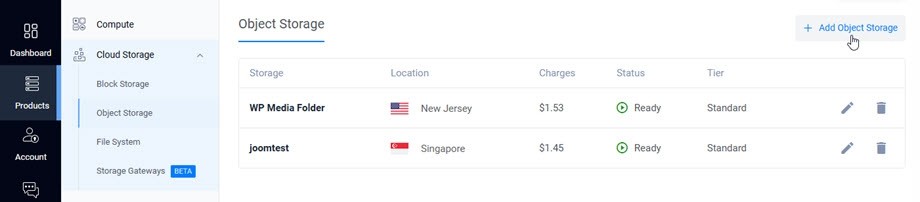
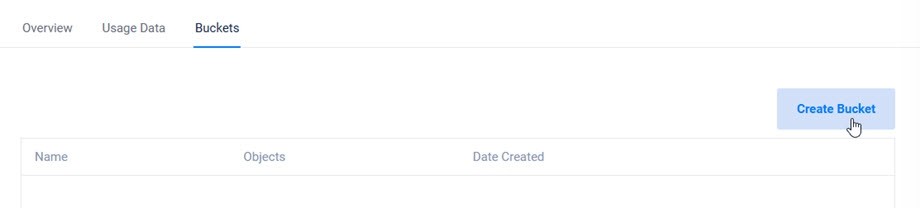
4. Create a bucket (this is where files will be stored)
The bucket acts as a container for all media files uploaded from WordPress.
Step 2: Generate S3-Compatible Credentials
Vultr Object Storage uses an S3-compatible system. You must generate:
- Access Key ID
- Secret Access Key
- Endpoint URL
These credentials allow external applications like WordPress to securely connect to your storage bucket.
The endpoint is especially important because it defines the exact region and route where files will be stored and retrieved.
Step 3: Install WP Media Folder Cloud Addon
To enable Vultr integration, you must install the WP Media Folder Cloud Addon.
This addon extends the core plugin and enables cloud storage connections.
Without it, WP Media Folder will only manage local media and will not support external storage providers like Vultr.
Step 4: Connect WP Media Folder to Vultr
Inside WordPress, go to:
Settings > WP Media Folder > Cloud & Media offload > Media offload > choose Vultr.
Then use the credentials that we got before from Vultr to fill the data:
- Enter Access Key and Secret Key
- Paste the Vultr endpoint
- Select your bucket
- Save settings
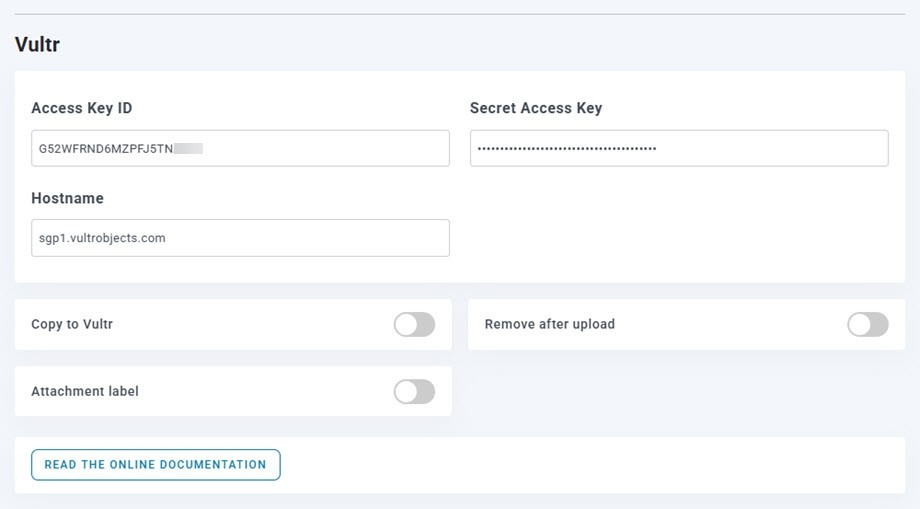
Once saved, the plugin will test the connection automatically.
If everything is configured correctly, WordPress will confirm that the storage bucket is accessible.
Step 5: Media Upload and Synchronization Workflow
After successful connection, WP Media Folder changes how media uploads behave.
New uploads
Any new file uploaded to WordPress is automatically:
- Sent to Vultr Object Storage
- Removed from local storage (depending on configuration)
- Linked via cloud URL
Existing media
Older files can be:
- Synced to Vultr in bulk
- Migrated gradually
- Kept locally if needed
This flexibility allows you to migrate without downtime.
Media URL Rewriting and Delivery
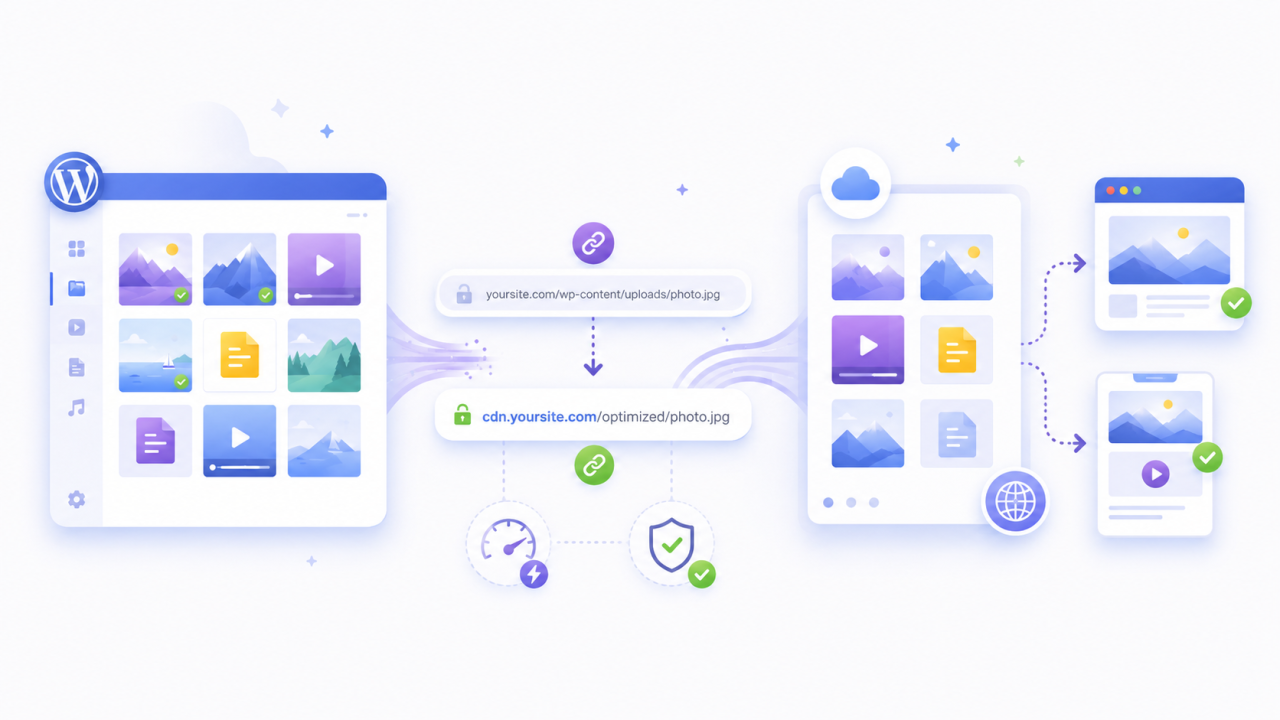
Once files are stored in Vultr, WordPress needs to update how they are served.
WP Media Folder automatically rewrites media URLs so that:
- Don't load from your hosting server
- Files are loaded directly from Vultr Object Storage
To visitors, everything looks unchanged. Images still appear normally inside your website.
However, behind the scenes, media is now delivered from the cloud.
This improves performance because your server no longer handles file delivery.
Performance and Hosting Load Reduction
Offloading media has a direct impact on server performance.
By removing media delivery from your WordPress hosting environment:
- Server CPU usage decreases
- Disk I/O is reduced
- Page load times improve
- Backups become lighter and faster
This is especially important for websites with large media libraries such as blogs, online stores, portfolios, or news platforms.
It also improves scalability, allowing your website to handle traffic spikes without performance degradation.
Vultr as a Cost-Effective Cloud Alternative
One of the key advantages of using Vultr is pricing efficiency.
Compared to many major cloud providers, Vultr Object Storage offers:
- Lower storage costs
- Predictable pricing
- Scalable capacity without complex billing tiers
This makes it a strong option for WordPress users who want cloud infrastructure without enterprise-level expenses.
When combined with WP Media Folder, it becomes a complete media offloading solution that is both affordable and easy to manage.
Ideal Scenarios for Using Vultr Object Storage
This setup is especially useful for:
- High-traffic blogs
- E-commerce stores with large product catalogs
- Media-heavy websites (images, galleries, portfolios)
- Educational platforms with downloadable content
- International websites serving global audiences
For global websites, cloud storage improves consistency by reducing dependency on a single physical server location.
Best Practices for Implementation
To ensure a smooth setup:
Start by uploading new media to Vultr first before migrating existing files. This reduces risk and allows testing.
Always verify URL rewriting after configuration to ensure no broken images.
Avoid migrating during peak traffic hours.
Monitor performance improvements using speed testing tools before and after setup.
Calling all webmasters!
Save time and boost productivity with WP Media Folder. Effortlessly organize client media
files, create custom
galleries, and provide a seamless user experience.
Upgrade your website projects now!
Conclusion: Improve WordPress Performance with Cloud Media Offloading
Offloading WordPress media to Vultr Object Storage using JoomUnited WP Media Folder is a practical way to improve performance, reduce hosting costs, and scale your website efficiently.
By separating media storage from your main server, you eliminate unnecessary load and create a more stable architecture. WP Media Folder simplifies the entire process by handling connection, synchronization, and URL rewriting directly inside WordPress.
For growing websites or media-heavy projects, this approach is one of the most effective ways to improve both performance and long-term scalability without increasing technical complexity.
When you subscribe to the blog, we will send you an e-mail when there are new updates on the site so you wouldn't miss them.